Why websites prices vary so much for small businesses
Understand why websites prices vary for small businesses, what affects quotes, and how to compare options before you hire a web designer.
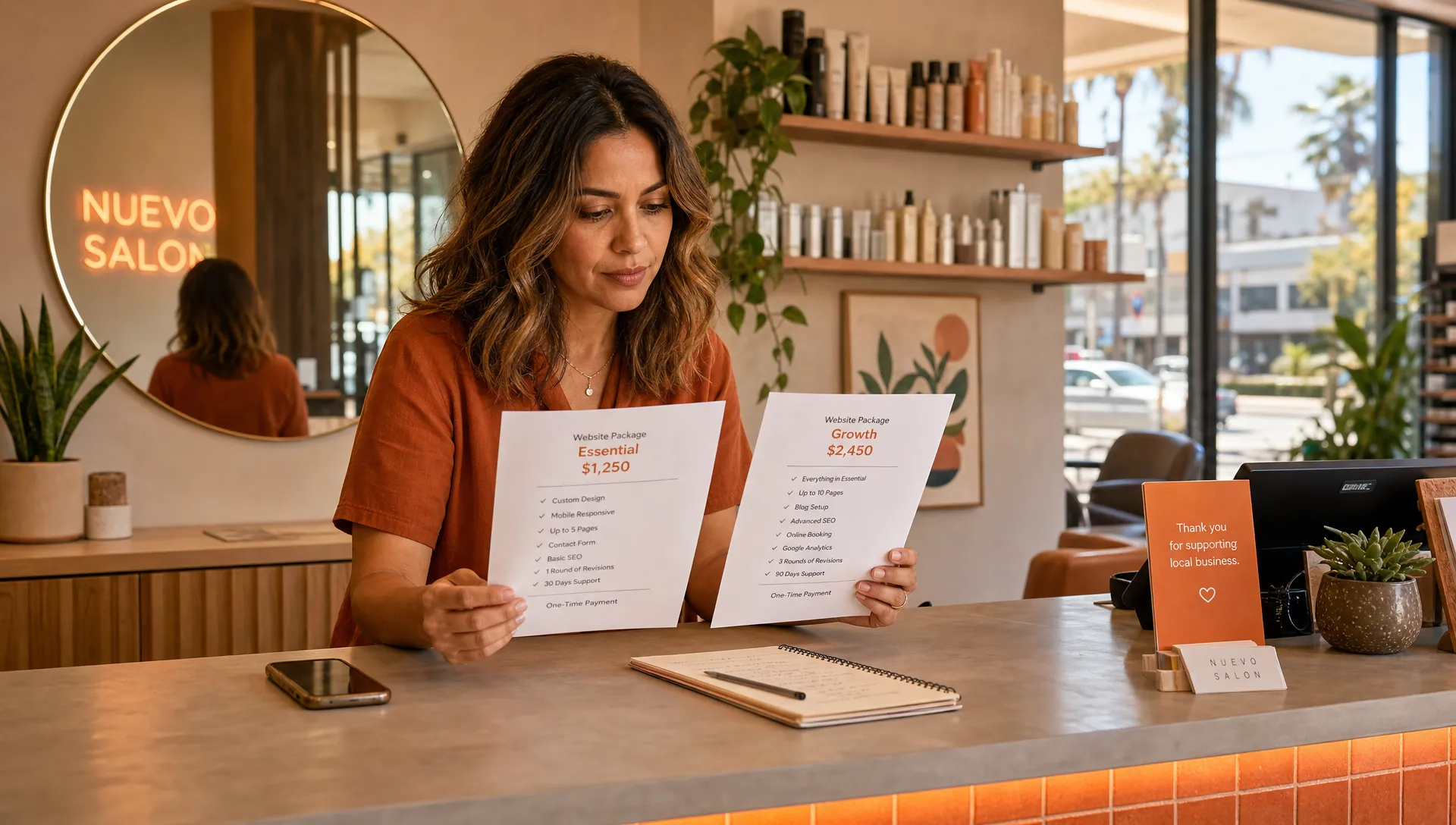
If you own a small service business in Los Angeles, you have probably seen website quotes that feel all over the place. One person says they can build your site for a few hundred dollars. Another quotes several thousand. Someone else has a monthly plan. When you are trying to keep your calendar full, cover rent, and avoid slow weeks, that can feel frustrating.
The truth is that websites prices vary because the word website can mean very different things.
For one designer, a website might mean a simple template with your logo, a few photos, and a contact button. For another, it might include page planning, writing help, mobile design, booking setup, Google basics, launch support, and care after the site goes live. Both may be honest quotes, but they are not selling the same amount of work.
This guide will help you understand what changes the price, what to look for in a quote, and how to choose the right level of website help for your business.
The word website covers a lot of different work
A one-page booking site for a solo esthetician is not the same job as a full site for a nail salon with multiple services, a team page, policies, gift cards, and a gallery. A sales page for a class or digital offer is not the same as a local service site that needs to help people book appointments every week.
That is why two website quotes can look completely different. The price depends on what the site has to do for your business.
A basic site might answer a few simple questions: who you are, what you offer, where you are, and how to book. That may be enough if you already get most of your clients from Instagram, referrals, or your Google Business Profile.
A more involved site has to do more. It may need to explain services clearly, help people choose the right option, show pricing or starting prices, answer common questions, share reviews, reduce nervousness before booking, and work well on phones. For local service businesses, those details matter because most visitors are not browsing for fun. They are deciding whether to trust you with their face, hair, nails, body, home, or health.
The biggest reasons website prices change
When you compare quotes, try not to look only at the final number. Look at what is included. A lower price can be a good fit if the scope is simple. A higher price can make sense if it includes more thinking, setup, and support.
| What affects the price | What it means in real life | Why it matters |
|---|---|---|
| Planning | Deciding what pages you need, what visitors should do, and what information comes first | A planned site is easier for clients to use |
| Number of pages | One booking page costs less than a full site with services, about, contact, FAQ, and sales pages | More pages take more writing, design, and checking |
| Copywriting help | The designer helps shape the words instead of only pasting in text you provide | Clear words help people understand and book faster |
| Booking setup | Buttons, forms, calendar links, service choices, and appointment paths are placed carefully | Booking should feel simple, especially on a phone |
| Mobile design | The site is checked and adjusted for small screens | Many local clients look you up from their phones |
| Google basics | Page titles, descriptions, headings, image names, and local wording are set up thoughtfully | This helps search engines understand your business |
| Photos and visuals | The designer may help choose, crop, place, or guide your images | Strong visuals build trust before a client visits |
| Timeline | A rush project may require focused time and quicker review rounds | Faster work can cost more because it changes the schedule |
| After-launch help | Updates, security checks, small changes, and support may be included or offered monthly | A site needs care after launch, not just on launch day |
A quote that includes only the design will usually cost less than a quote that includes planning, writing help, booking flow, launch checks, and updates. That does not mean one is good and one is bad. It means you need to know what you are buying.
You are not just paying for pages
It is easy to think a website price should be based only on the number of pages. Five pages should cost five times one page, right? Not always.
A page with a few short sections can be simple. A page that needs to explain a high-trust service, answer objections, show proof, guide visitors to the right booking option, and look polished on phones takes more work.
This is true with many business tools. A niche resource like the AI Product Adoption Deck is not priced only by the number of cards included. The value is also in the thinking, structure, and practical guidance behind it. Websites work in a similar way. You are paying for the visible design, but also for the decisions behind the design.
For a Los Angeles skincare studio, those decisions might include where to place your facial menu, how to explain first-time client appointments, how to make policies feel clear but not cold, and how to help someone book without needing to message you first.
For a personal trainer, it might include showing who the training is for, what results clients can expect, where sessions happen, and how to request a consultation.
For a lash or nail salon, it might include making service categories easy to scan, showing location details, linking booking buttons in the right places, and helping new clients understand timing, deposits, or prep instructions.
Cheaper is not always bad, and expensive is not always better
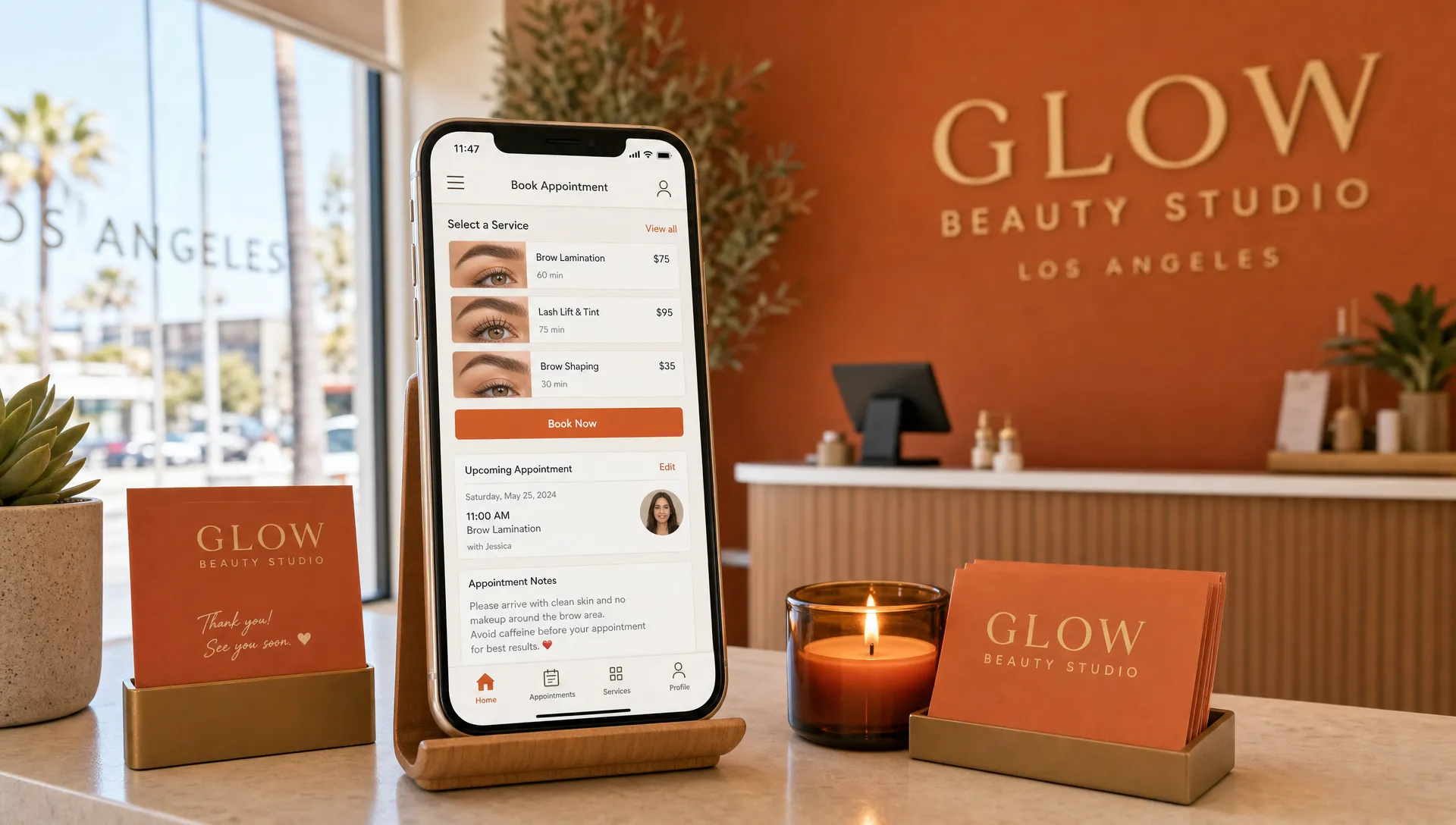
A lower-cost website can be the right choice if your business is early, your services are simple, and you mainly need a clean online home. Maybe you just need one page that links to your booking app, shows your location, and gives new clients enough trust to schedule.
That can be a smart starting point. You do not need to build a large website before you have clear offers, good photos, or steady service details.
But a very cheap website often leaves more work on your plate. You may need to write all the words, choose all the photos, connect your own domain, set up your own booking buttons, check the mobile version, and fix issues later. If you are comfortable doing that, great. If not, the low price may turn into extra stress.
A higher-priced website can be worth it when your site needs to carry more of the load. If you are tired of answering the same questions in Instagram messages, losing people because your booking link is hard to find, or sending long texts to explain services, you may need more than a pretty page.
The best price is not the lowest price. It is the price that matches what your business needs right now.
If you want a deeper look at actual ranges, this guide to realistic website price ranges for 2026 breaks down common options for small businesses.
Local service businesses have different website needs
A local service website has a very practical job. It needs to help the right people feel safe enough and clear enough to book.
That is different from a personal blog or a simple online brochure. Your site has to answer real client questions before they reach out. For beauty studios and solo pros, those questions are often simple but important.
Clients may want to know what service to choose, what the appointment includes, how long it takes, what it costs, where to park, how to prepare, whether you work with their skin type or goals, and what happens if they need to reschedule.
If those answers are missing, people may leave, keep scrolling, or message you with questions instead of booking. That does not always mean they were not interested. It may mean the site made the next step feel too hard.
That is why a booking-focused site often costs more than a basic page. It takes time to organize information in a way that feels natural to a real person. If you want more help with this part, these service website design tips that turn visits into bookings explain what makes a service site easier to use.
What should be included in a clear website quote?
A good quote should not leave you guessing. It should explain what you get, what you need to provide, what happens after launch, and what could cost extra.
Before you compare prices, ask what is included in these areas:
- Pages and sections included in the project
- Writing help or copy review
- Mobile layout and testing
- Booking button or calendar setup
- Contact form setup
- Basic Google setup for page titles and descriptions
- Image help, cropping, or placement
- Domain, hosting, or launch support
- Number of revision rounds
- Timeline and your review deadlines
- Ongoing updates or care after launch
If one quote includes all of that and another only includes a template setup, the prices will not match. That is normal.
The clearest quote is not always the longest quote. It is the one that helps you understand what will happen and what you are responsible for.
When a booking page is enough
Not every small business needs a full website right away. A booking page can be a strong choice if you have one main service category, a clear location, and one main action you want visitors to take.
For example, a solo waxer may need a warm page with services, first-time client details, reviews, location, and a clear booking button. A trainer may need a page that explains who they help and invites visitors to schedule a consult. A creator selling one offer may need a single sales page instead of a full site.
A smaller site can work well when the goal is simple. It can also launch faster because there are fewer pages to write, design, and review.
The key is focus. If your page tries to do too many things, it can become confusing. If your site has one main goal, it is much easier for visitors to know what to do next. This is why it helps to layout websites around one goal before adding extra pages.
When a full site makes more sense
A full site may make more sense when your business has several service types, a team, a strong local presence, or a lot of trust-building to do.
A skincare studio with facials, peels, acne programs, memberships, and retail may need more space than one page can comfortably hold. A gym may need pages for classes, trainers, memberships, location, FAQs, and trial sessions. A salon may need separate service pages so clients can find the right information without digging.
A full site can also help when you want more room for local search. Separate pages can give Google and visitors clearer information about what you offer and where you offer it. That does not guarantee rankings, but it gives your business a better-organized home online.
The tradeoff is that a full site takes more time. There are more words to write, more design choices to make, more links to check, and more details to keep current.
Why after-launch care changes the price
Some website projects end at launch. Others include care after the site is live. That difference can change the price quite a bit.
After-launch care may include updates, small text changes, plugin or software checks, backups, security checks, and help when something breaks or needs adjusting. For a busy salon owner or solo professional, that support can be a relief.
Without care, you may pay less at the start. But you are also responsible for keeping the site current. If your hours change, your prices change, your booking link changes, or a page stops working, you need to handle it or hire someone later.
Neither option is wrong. It depends on whether you want a one-time build or an ongoing relationship with someone who can help keep the site healthy.
How to compare website quotes without getting overwhelmed
When quotes are very different, put them side by side and compare the actual work. Do not just ask why one is cheaper. Ask what each quote includes and what each one leaves out.
A simple way to compare is to look at three things: what you need now, what you can handle yourself, and what would cost you time or bookings if it were done poorly.
If you are good at writing and comfortable with tech, you may not need as much help. If you are busy with clients all day and know you will avoid the website if it feels too technical, paying for more support may be the better choice.
Also pay attention to communication. A good designer should be able to explain the process in plain language. You should not feel talked down to, rushed, or confused. If you are still deciding who to hire, this guide on choosing the right web designer can help you ask better questions.
Frequently asked questions
Why do website prices vary so much? Website prices vary because each quote may include different work. One may include only a basic design, while another includes planning, copywriting support, mobile checks, booking setup, launch help, and ongoing care.
Is a cheap website a bad idea? Not always. A lower-cost website can be a good fit if your needs are simple and you are comfortable handling more of the writing, setup, and updates yourself.
Do I need a full website or just a booking page? You may only need a booking page if you have one main offer and want people to schedule quickly. A full site may be better if you have many services, a team, several locations, or more information clients need before booking.
What should I ask before hiring a web designer? Ask what pages are included, whether writing help is included, how booking links are handled, whether the site will be checked on phones, what the timeline looks like, and what happens after launch.
Should I pay for website care after launch? Website care can be helpful if you do not want to manage updates, small changes, security checks, or technical issues yourself. If you prefer to handle those things on your own, a one-time project may be enough.
The right website price should match the job
If you are comparing website quotes, remember that the goal is not to find the cheapest number. The goal is to find the right fit for your business, your time, and the way clients book with you.
A small, focused booking page may be perfect for where you are now. A fuller site with more support may be the right move if your current site feels outdated, hard to use, or too confusing for new clients.
Raine Archer builds warm websites for small businesses, solo pros, salons, and local service owners who want booking to feel clear and easy. If you are ready for a site that feels like your business and helps clients take the next step, start by looking at the kind of support and pricing structure that fits your season.