How to Choose the Right Web Designer for Your Business
How to compare web designers for your small business — match strategy to your goals, weigh local vs remote, read a portfolio for conversion, and spot the red flags.
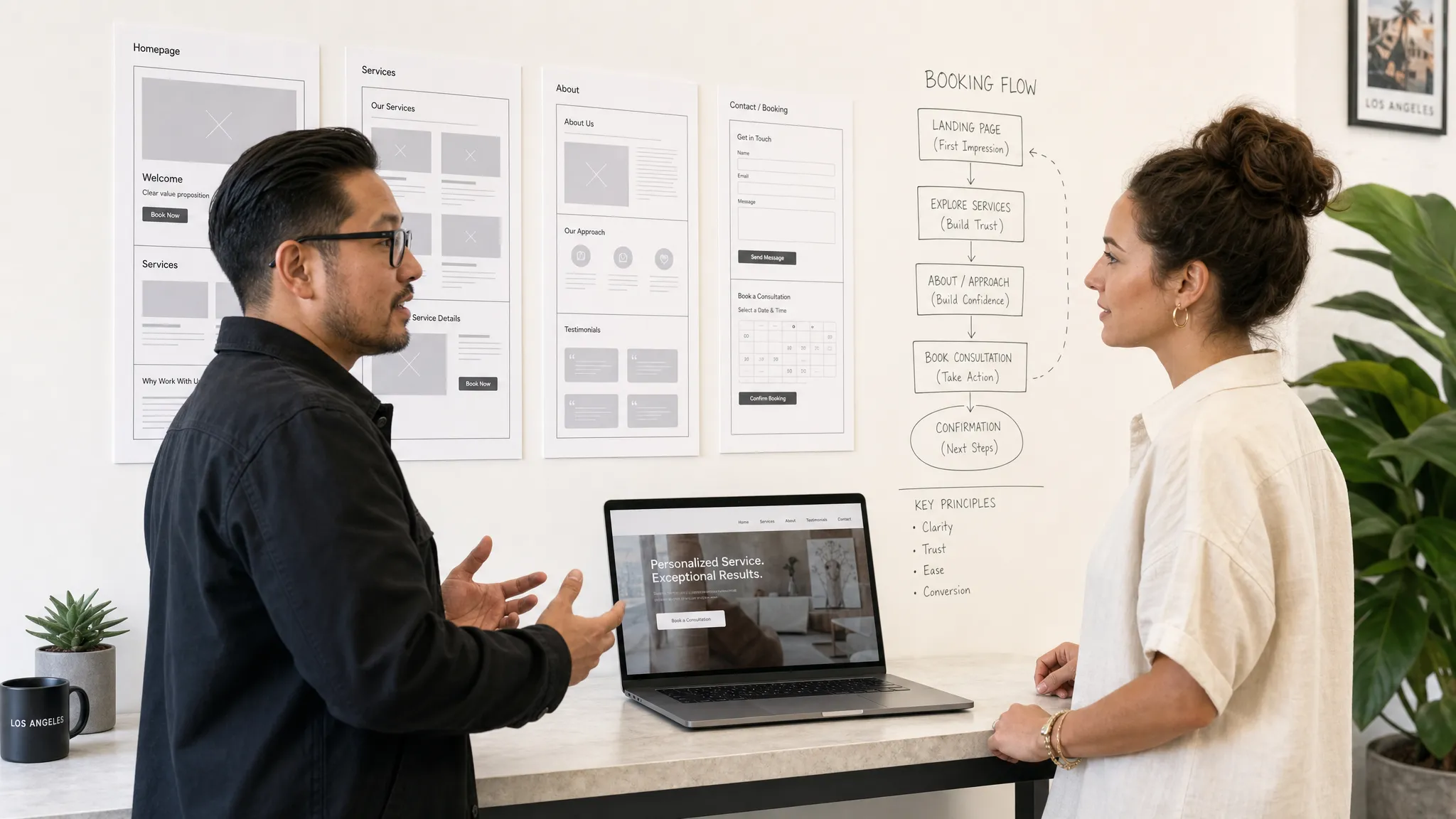
Choosing a web designer is not just about finding someone with a beautiful portfolio. For most small businesses, your website has a job to do: help people understand what you offer, trust you quickly, and take the next step to book, buy, inquire, or join your list.
That means the "right" web designer is not always the flashiest, the cheapest, or even the person closest to you geographically. The right fit is the designer who understands your goals, can translate them into a clear online experience, and has a process that makes the project feel manageable.
If you have been searching for "web page design near me" and feeling overwhelmed by options, this guide will help you compare designers with more confidence.
Start With the Type of Website Your Business Actually Needs
Before you compare portfolios or book discovery calls, get clear on the kind of site you need. Many business owners start by saying, "I need a website," but that can mean several very different things.
A solo service provider may only need a focused booking page that explains the offer, answers basic questions, and routes visitors to schedule. A creator launching one product may need a sales page with persuasive copy, social proof, and a simple purchase path. A salon, studio, or local business may need a fuller site with service pages, location details, policies, staff information, and ongoing updates.
The clearer you are on the outcome, the easier it becomes to choose the right designer. A designer who specializes in polished brand storytelling may be perfect for a portfolio site, while a designer who thinks in terms of bookings and conversions may be better for a service business that needs more inquiries.
Ask yourself:
- What action should visitors take after landing on my site?
- Do I need one page, a few key pages, or a full website?
- Will I need help with copy, images, SEO basics, hosting, or updates?
- Is this for a launch, a redesign, or a first real online presence?
- What would make the website feel successful 30 to 90 days after launch?
For example, if you are promoting one specific offer, launch, service, or event, a focused one-page site may be enough. In that case, working with someone who offers landing page design for single offers can be more efficient than commissioning a large full site you do not need yet.
Decide Whether "Near Me" Really Matters
Searching for a local designer can be helpful, especially if your business also serves a local market. A Los Angeles salon, wellness studio, or consultant may appreciate working with someone who understands the pace, visual expectations, and competitive landscape of the area.
Local context can also make collaboration easier. You may be in the same time zone, share references, or even have access to local photographers, brand designers, or other service providers. If you are typing "web page design near me" because you want a real person who understands your market, that is a valid reason.
Still, location should not be the only deciding factor. A designer across the country with a strong process, relevant experience, and excellent communication may be a better fit than a nearby designer who does not understand your goals. The best approach is to weigh local convenience against strategic fit.
| Factor | Local designer may help if... | Remote designer may still work if... |
|---|---|---|
| Market understanding | You serve a specific city or neighborhood | They research your audience and competitors |
| Communication | You prefer the same time zone or local calls | They have a clear async process and response times |
| Brand context | Your visuals depend on local culture or lifestyle | You can provide strong references and examples |
| Project logistics | You need local referrals for photos or brand assets | You already have assets or can source them separately |
In short, "near me" is useful as a filter, not a guarantee. Your final decision should come down to the designer's ability to create a site that supports your business goals.
Look for Strategy Before Style
A strong designer will care about how the website looks, but they will also care about why each section exists. If a portfolio is beautiful but you cannot tell what the business offers, who it serves, or how to take action, that is a problem.
Design should create clarity. On a small business website, visitors should quickly understand what you do, who it is for, why it is valuable, and what to do next. This is especially important for booking-based businesses like salons, estheticians, coaches, consultants, and service providers, where a confused visitor often leaves instead of asking for clarification.
During your first conversation, listen for strategic questions. A thoughtful designer may ask about your audience, your best-selling services, your current conversion problems, your booking process, your competitors, and your comfort level with maintaining the site later. Those questions signal that they are thinking beyond colors and fonts.
A designer who immediately jumps into aesthetics without asking about your business may still create something pretty, but pretty alone does not pay for the project.
Review Their Portfolio With a Business Lens
When you look at a designer's work, do not only ask, "Do I like this?" Ask, "Would this help a visitor take action?"
A good portfolio should show clarity, hierarchy, mobile responsiveness, and a sense of audience fit. It does not need to match your exact industry, but it should show that the designer can adapt to different brands while keeping the user experience simple.
Pay attention to details like page flow, call-to-action placement, readability, and whether the site works for real humans on phones. According to Google Search Central, creating helpful, reliable, people-first content is central to search visibility. Your designer does not need to promise instant rankings, but they should understand that structure, clarity, and useful content matter.
If possible, ask for context behind portfolio pieces. What was the client trying to achieve? What was changed from the old site? Did the designer help with copy, structure, or launch support? The answers can tell you more than screenshots alone.
Make Sure They Understand Conversion
Conversion does not always mean a hard sell. For a small business, conversion might mean booking a consultation, submitting an inquiry form, purchasing a service, signing up for a waitlist, or simply understanding enough to feel ready to reach out.
The right web designer will help reduce friction between curiosity and action. That might mean simplifying your navigation, making your booking button easier to find, clarifying your offer, improving your service descriptions, or placing trust signals where visitors need reassurance.
Strong conversion-focused design often includes:
- A clear primary call to action on important pages
- Service or offer descriptions written in plain language
- Testimonials, reviews, press, or examples where available
- Mobile-friendly layouts with readable text and tappable buttons
- Simple forms that ask only for what is necessary
- Clear next steps after someone clicks, books, or submits
This is where copywriting support matters. Many business owners assume they only need design, then realize the hardest part is explaining what they do. If you struggle to write about your own work, look for a designer who can guide the copy or collaborate on messaging.
Ask About Mobile, Accessibility, and SEO Basics
A website that looks great on a desktop mockup but feels clunky on a phone is not finished. Many visitors will discover you from Instagram, Google, a text referral, or a mobile browser, so your site needs to work beautifully on smaller screens.
Accessibility also deserves attention. Accessible design helps more people use your site, including visitors with visual, motor, auditory, or cognitive disabilities. The W3C Web Accessibility Initiative explains that accessibility benefits people in many situations, not only those with permanent disabilities. At a practical level, this can include readable contrast, descriptive links, keyboard-friendly navigation, clear forms, and logical page structure.
SEO basics are another key part of a professional build. A small business website does not need an aggressive SEO campaign on day one, but it should launch with foundations in place. That can include clean headings, page titles, meta descriptions, image alt text, fast-loading pages, and content that matches what customers are actually searching for.

Compare Process, Timeline, and Communication Style
The designer's process can make or break the experience. Even a talented designer may not be the right fit if their communication style makes you anxious or their process leaves you guessing.
Before signing, ask what happens after you say yes. A clear process should explain how strategy, copy, design, development, revisions, launch, and post-launch support will work. You should know what you are responsible for, what the designer will handle, and what deadlines matter.
This is especially important if you need a fast turnaround. Fast does not mean rushed, but it does require organized decisions, prompt feedback, and a scope that matches the timeline. A focused booking page can usually move faster than a full website with multiple services, integrations, and custom content needs.
It is also wise to ask how revisions are handled. Unlimited revisions can sound appealing, but they often indicate an unclear process. A defined revision structure usually creates better momentum because both sides know when feedback is due and what kind of changes are included.
Understand What Is Included in the Price
Website pricing can vary widely because designers include different levels of strategy, copy, development, integrations, SEO setup, and support. A lower quote may only include visual design, while a higher quote may include planning, copy guidance, mobile optimization, launch support, and basic technical setup.
Instead of comparing only the final number, compare the scope. A transparent proposal should make it clear what you are buying and what is not included. This protects both you and the designer.
| What to clarify | Why it matters |
|---|---|
| Number of pages | Prevents confusion about whether extra pages cost more |
| Copy support | Helps you know if you need to write everything yourself |
| Mobile design | Confirms the site is built for phone users, not just desktop |
| SEO setup | Sets expectations for basic optimization versus ongoing SEO |
| Hosting and domain help | Clarifies who handles technical setup |
| Revisions | Defines how feedback and changes will be managed |
| Post-launch support | Helps you avoid being left alone after launch |
If a designer offers clear starting prices, that can save time early in the process. You may still need a custom quote depending on scope, but transparent pricing helps you understand whether you are in the right range before investing in a full consultation.
Do Not Skip Post-Launch Support
A website is not a one-time file that sits untouched forever. Plugins, platforms, content, security settings, forms, links, policies, and offers can all change over time. If your site is connected to your booking flow or sales process, it needs to keep working after launch.
Ask what happens once the site goes live. Will the designer provide a handoff? Can they make updates later? Do they offer a care plan? Who is responsible if something breaks, a form stops working, or you need to add a new offer?
Some business owners are comfortable maintaining their own site. Others would rather stay focused on clients and let someone else handle updates. Neither choice is wrong, but you should make it intentionally.
For service businesses, ongoing support can be especially valuable because offers, seasonal promotions, team members, and booking details often shift. A care plan can help keep your website accurate, secure, and aligned with your business as it grows.
Watch for Red Flags
Most web designers want to do good work, but not every designer is a good fit for every business. A few warning signs can help you avoid frustration.
Be cautious if a designer cannot explain their process, avoids talking about your business goals, offers vague pricing with no clear scope, or promises guaranteed Google rankings without explaining the work involved. Also be careful if their own website is confusing, slow, or difficult to use on mobile.
Another red flag is a designer who says yes to everything without clarifying tradeoffs. Every project has constraints. Budget, timeline, platform, content, and business goals all shape the final site. A good designer will help you make smart decisions, not simply agree to every idea and hope it works later.
Finally, trust your communication instincts. If you feel dismissed, rushed, or confused before the project begins, that feeling may intensify once money and deadlines are involved.
Questions to Ask Before Hiring a Web Designer
A discovery call should help both sides decide whether the project is a fit. You do not need to interrogate the designer, but you should leave with confidence about their approach.
Here are helpful questions to ask:
- Have you worked with businesses like mine or similar business models?
- How do you approach strategy before design?
- Do you help with website copy or page structure?
- What is included in your pricing?
- What do you need from me before the project starts?
- How many revision rounds are included?
- Will the site be mobile-friendly?
- What basic SEO setup is included?
- Do you help with hosting, domain setup, or launch?
- What support is available after the site goes live?
The best answers will be specific without being overly complicated. You are looking for clarity, not jargon.
A Simple Scorecard for Making the Final Choice
If you are comparing two or three designers, create a simple scorecard. This keeps you from choosing based only on emotion, price, or one beautiful portfolio piece.
| Criteria | What a strong fit looks like |
|---|---|
| Business understanding | They ask about goals, audience, offers, and conversion |
| Relevant experience | Their work shows clarity for businesses similar to yours |
| Visual style | Their design taste aligns with your brand direction |
| Copy and messaging | They can support or guide the words on the page |
| Mobile experience | They prioritize phone users from the start |
| SEO foundations | They understand basic structure and discoverability |
| Process | They explain steps, timelines, feedback, and launch clearly |
| Support | They offer handoff, updates, or ongoing care options |
| Trust | You feel comfortable communicating with them |
If one designer scores highest on trust, clarity, and business understanding, they may be the strongest long-term choice even if they are not the cheapest.
Frequently Asked Questions
How much should I expect to pay for a web designer? Pricing depends on scope, experience, platform, copy needs, number of pages, and support. A one-page booking or sales page usually costs less than a full website. Always compare what is included, not just the final quote.
Should I hire a local web designer or work remotely? Hire locally if local market knowledge, same-time-zone communication, or in-person referrals matter to you. Remote can work well when the designer has a clear process, strong communication, and relevant experience.
What is the difference between a web designer and a web developer? A web designer focuses on layout, user experience, visuals, and often page strategy. A developer focuses more on building technical functionality. Many small business website providers offer a blend of design, build, and launch support.
Do I need SEO when hiring a web designer? You should at least have SEO basics included, such as clean page structure, titles, meta descriptions, mobile-friendly design, and readable content. Ongoing SEO is a separate long-term effort, but your site should launch with a solid foundation.
How do I know if I need a landing page or a full website? Choose a landing page if you have one clear offer and one main action. Choose a full website if you have multiple services, audiences, locations, resources, or trust-building pages that visitors need before booking.
Choose a Designer Who Makes Your Website Easier to Use and Easier to Trust
The right web designer will not just make your business look more polished. They will help you turn scattered ideas into a clear path for your visitors, from first impression to next step.
If you are a salon, solo professional, creator, or small business owner looking for warm, conversion-focused design, Raine Archer builds booking pages, sales pages, and full websites with clear pricing, mobile-first design, light SEO setup, launch support, and ongoing care plans.
A good website should feel like a calm, capable extension of your business. Choose the designer who can help you build that with clarity from the first conversation.