Websites prices in 2026: what small businesses should expect
Websites prices in 2026 vary by scope. See realistic ranges, extra costs, and what LA small businesses should ask before hiring a designer.
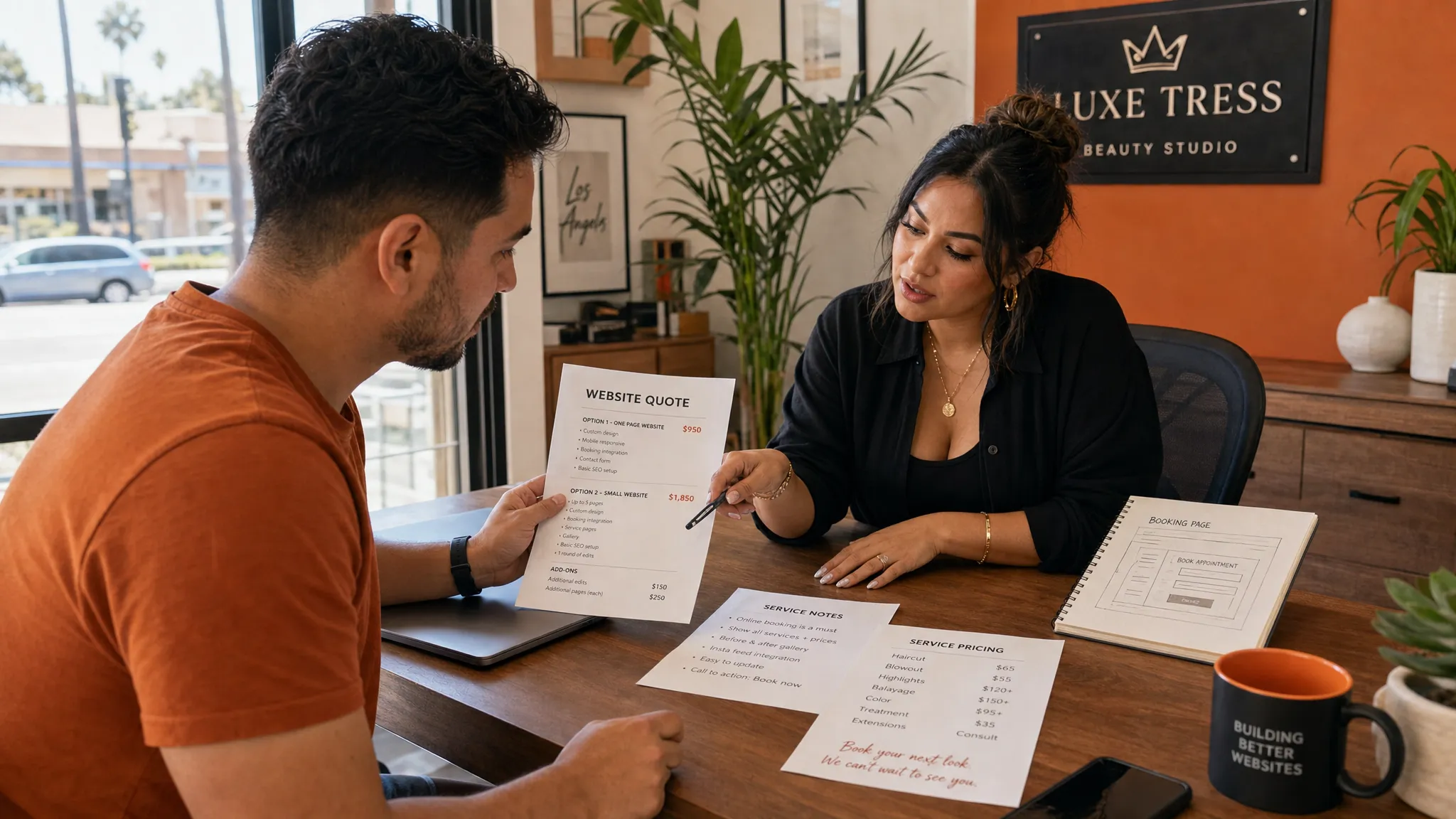
If you have been searching “websites prices” because your current site feels dated, hard to use on a phone, or too quiet during slow weeks, you are not alone. A lot of small business owners wait until bookings dip before looking into a new website, then get hit with quotes that feel all over the place.
One designer says $900. Another says $6,500. A larger agency says $15,000. A DIY platform says you can do it yourself for a monthly fee. None of that is helpful unless you know what is included and what your business actually needs.
For a local service business in Los Angeles, a website should do a few simple things well. It should help people understand what you offer, trust you, find your location, see your prices or starting points, and book without getting confused. The right budget depends on how much help you need to get there.
Websites prices in 2026: a quick range
Small business website prices in 2026 can range from a few hundred dollars to well over $10,000. That does not mean every small business needs a huge site. A solo esthetician with one main booking goal needs something very different from a multi-room salon with a full service menu, staff pages, gift cards, and ongoing updates.
Here is a realistic way to think about common price ranges.
| Website type | Common 2026 price range | Best fit | What to check before saying yes |
|---|---|---|---|
| DIY website builder | $0 to $500 for setup, plus monthly platform fees | Brand-new businesses with more time than budget | You will likely write, design, and connect everything yourself |
| Template setup by a designer | $800 to $2,500 | Simple businesses that need a clean online home fast | Make sure mobile layout, booking links, and copy cleanup are included |
| One-page booking page or service landing page | $1,200 to $3,500 | Solo pros, waxers, trainers, lash artists, and consultants with one main booking path | Ask if the page includes booking buttons, service details, trust sections, and basic Google setup |
| Small business full site | $3,500 to $9,000 | Salons, skincare studios, gyms, and local services with several pages | Confirm the number of pages, copy support, launch help, and update plan |
| Larger custom website | $9,000 to $20,000+ | Multi-location businesses, bigger teams, custom features, or content-heavy sites | Ask what is custom, what is ongoing, and what fees come after launch |
| Website care plan | $50 to $500+ per month | Businesses that want help with updates, safety checks, and small changes | Check what is included each month and what counts as extra work |
These ranges are not rules. A very simple site can cost more if it includes strong copywriting, custom design, and a rushed timeline. A larger site can cost less if you already have strong photos, clear service descriptions, and a simple structure.
The biggest thing to remember is this: you are not only paying for pages. You are paying for the thinking, writing, layout, mobile setup, booking path, testing, and launch support that help the site work for real clients.
Why one website quote can be $900 and another can be $9,000
Website pricing gets confusing because people use the word “website” to mean very different things.
A $900 website might be a lightly edited template with your logo, colors, and a few text changes. That can be perfectly fine if your needs are simple and you are comfortable providing most of the words and images.
A $9,000 website may include planning, page layout, copywriting help, custom design, mobile checks, service page writing, basic search setup, booking tool connections, launch support, and a few weeks of changes. It may also involve a designer, copywriter, developer, and project manager.
Neither price is automatically good or bad. The question is whether the quote matches what your business needs right now.
For example, if you own a small waxing studio in Highland Park and your main issue is that new clients cannot figure out where to book, you may not need a 12-page custom site. You may need one strong booking page with clear services, reviews, location details, parking notes, and a book button that shows up often.
If you run a skincare studio with facials, peels, memberships, product recommendations, policies, and several providers, a fuller site may make more sense because clients need more information before they feel ready to book.
What changes the price the most
The final price usually depends on a few practical things. These are worth understanding before you compare quotes.
Number of pages
A one-page site usually costs less than a five-page site. A five-page site usually costs less than a 15-page site. More pages mean more writing, layout decisions, mobile checks, and review time.
Common pages for a service business include home, services, about, booking, contact, FAQs, and sometimes separate pages for each main service.
Copywriting support
Writing your own website can take longer than expected. Many business owners know their work inside out, but freeze when they have to explain it online.
If your designer helps write or shape the words, the quote will often be higher. That can be worth it if your current site sounds vague, outdated, or too formal for the way you actually talk to clients.
Photos and brand materials
Strong photos can make a simple site feel polished. Weak, dark, or mismatched photos can make even a nice design feel unfinished.
Some website projects include light photo selection or guidance. Others expect you to bring all images ready to go. If you need a brand refresh, logo work, or a photo shoot, that is usually separate from the website price.
Booking setup
For service businesses, booking is not a small detail. It is the whole point.
Your website may need to connect to a tool like Square, GlossGenius, Vagaro, Acuity, Jane, Mindbody, or another booking system. A simple link is usually easier than a full setup. If you need help organizing services, adding policies, or cleaning up the booking flow, that can add time and cost.
Mobile design
Most local clients will check your site from their phone. If the mobile version is hard to read, has tiny buttons, or hides the booking link, people may leave before they ever contact you.
A lower quote may include only basic mobile checks. A stronger quote should include time to make sure the mobile version is easy to use.
Search setup
Basic search setup can include page titles, descriptions, headings, image names, local keywords, and connecting your site to tools like Google Search Console. This does not guarantee first-page rankings, but it gives your website a cleaner start.
Local search is also changing as Google shows more quick answers before someone clicks a website. If you want a broader view of how search marketing is changing for local businesses, this breakdown from how search marketing is changing for local businesses is a helpful place to look.
What kind of website does your business actually need?
Before asking, “How much should I spend?” ask, “What does my website need to help with?”
| Business situation | A good fit might be | Why it works |
|---|---|---|
| You are a solo pro with one main offer | One-page booking page | Keeps visitors focused on services, trust, location, and booking |
| You are opening a new salon or studio | Small full site | Gives space for services, policies, photos, location, and FAQs |
| You already have traffic but people are not booking | Website refresh or new layout | Fixes unclear pages, weak calls to book, and confusing service info |
| You have several service categories | Full site with separate service pages | Helps people find the exact service they want and understand the difference |
| You are testing a new offer | Simple sales page | Lets you explain one offer without rebuilding your whole site |
If you only need one clear page for one clear action, this guide to service landing page design that makes booking feel easy goes deeper into what that page should include.
Costs outside the design fee
The website quote is not always the full cost of having a website. Some costs come from outside tools and are paid monthly or yearly.
A basic domain name often costs around $10 to $30 per year, though premium names can cost much more. Website platforms and hosting can range from low monthly fees to $100+ per month, depending on the platform and plan. Booking tools, email marketing, forms, plugins, and scheduling software may also have their own fees.
You may also have optional costs, like new brand photos, stock images, fonts, copywriting, logo design, or extra updates after launch.
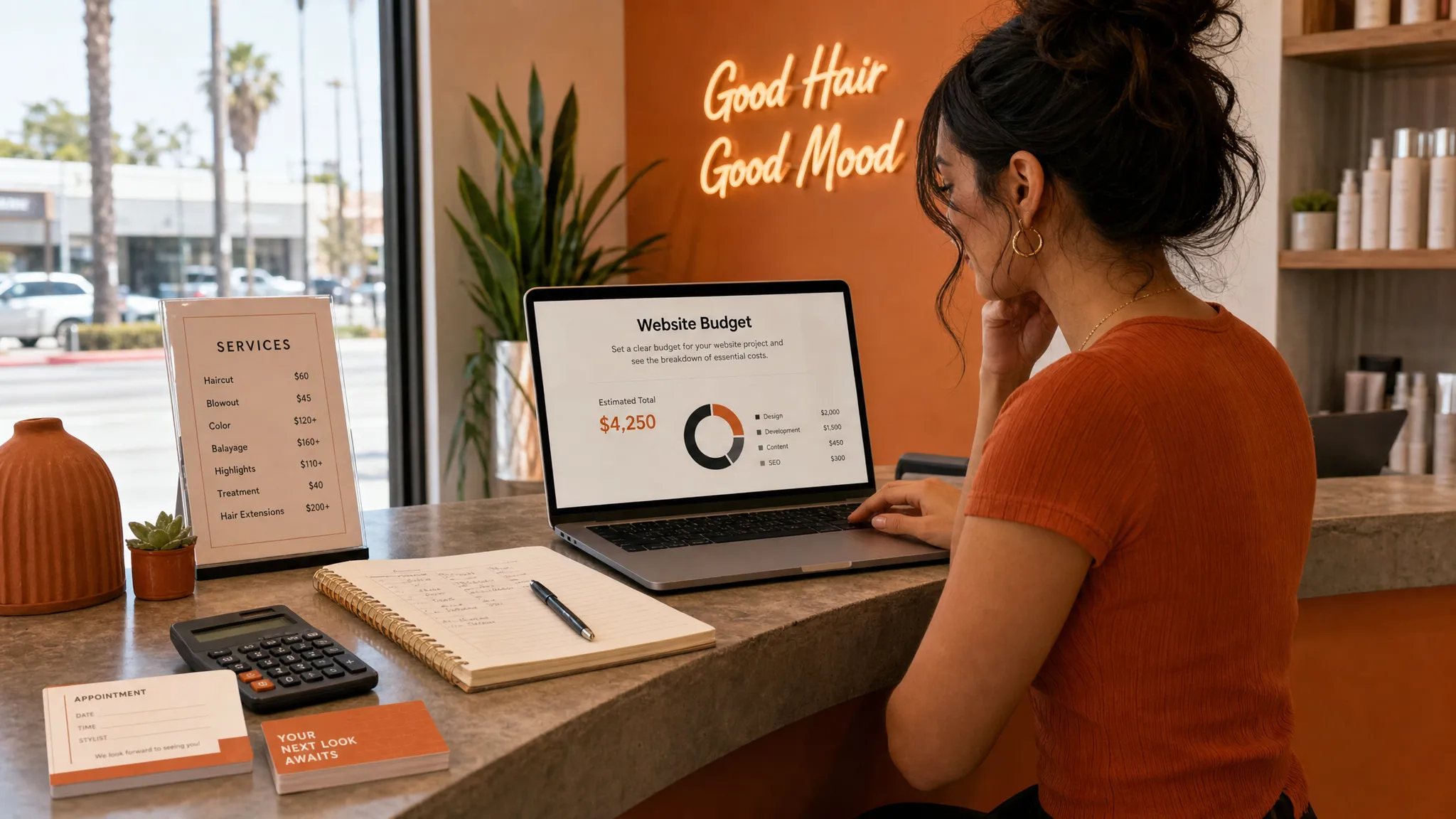
A fair designer should be clear about what is included in their quote and what you will pay separately. You should know who owns the domain, who pays for hosting, which platform the site will live on, and what happens if you need changes later.
What a solid website quote should include
When you compare quotes, do not only compare the final number. Compare what you are actually getting.
| Quote item | What it means in plain language |
|---|---|
| Page list | Which pages are included, such as home, services, about, contact, or booking |
| Copy support | Whether the designer helps write, edit, or organize your words |
| Mobile setup | Whether the site is checked and adjusted for phones |
| Booking path | How easy it is for visitors to choose a service and book |
| Basic search setup | Whether titles, descriptions, headings, and local wording are handled |
| Revisions | How many rounds of changes are included |
| Launch help | Whether the designer connects the domain, checks links, and helps the site go live |
| After-launch support | Whether you get help after launch or need a separate care plan |
A clear quote protects both sides. You know what you are paying for, and the designer knows what they are responsible for delivering.
If you are still deciding who to hire, this guide on how to choose the right web designer for your business can help you compare style, communication, process, and price without getting overwhelmed.
When a lower website price makes sense
A lower price can be a smart choice if your business is brand new, your budget is tight, or you only need a simple online presence for now.
It can also make sense if you already have clear writing, strong photos, a booking tool that works well, and a simple list of services. In that case, you may not need a deep custom project. You may just need someone to put everything together cleanly.
A lower-cost website is usually not the best fit if your services are hard to explain, your current site is causing confusion, or you are relying on the site to bring in a steady flow of new bookings. If your website plays a big role in your income, it is worth paying for clarity and care.
When paying more is worth it
Paying more can be worth it when the site needs to solve real business problems.
For example, maybe clients keep booking the wrong service. Maybe they text you the same questions over and over because your site does not explain policies, prep, or aftercare. Maybe your site looks fine on a laptop but is messy on a phone. Maybe your Google profile gets views, but people do not click through or book.
In those cases, you are not just buying a prettier site. You are paying for a clearer client experience.
For local service businesses, that can mean fewer repeated questions, fewer confused bookings, fewer no-shows caused by missing information, and a smoother path from “I found you on Google” to “I booked my appointment.”
Red flags and green flags when comparing website prices
A price can look good on paper and still be a bad fit. Here are simple signs to watch for.
| Green flag | Red flag |
|---|---|
| The designer asks how clients book now | The quote just says “website” with no details |
| They talk about mobile layout | They only show desktop examples |
| They ask about services, policies, and common questions | They focus only on colors and fonts |
| They explain what happens after launch | They disappear once the final invoice is paid |
| They are clear about extra costs | You are surprised by platform, plugin, or hosting fees later |
You do not need to become a website expert. You just need enough clarity to know whether the quote matches your goals.
A simple way to choose your 2026 website budget
If you are unsure what to spend, start with your business stage.
If you are just starting and still testing your offers, keep it simple. A clean one-page site or template setup may be enough.
If you are booked part-time but want more consistent clients, invest in a stronger booking page or small site that explains your services clearly and looks good on mobile.
If you have a growing studio, a team, or several service categories, budget for a fuller site with stronger structure, better service pages, and room to grow.
If your website has not been touched in years, add room in your budget for cleanup. Old pages, outdated photos, broken links, unclear service names, and missing policies take time to fix.
The best website price is not the cheapest or the most expensive. It is the one that fits what your business needs now and gives you room to grow without making you pay for things you do not need.
Frequently asked questions
How much should a small business website cost in 2026? Many small business websites fall somewhere between $1,200 and $9,000, depending on size, copy help, booking setup, and custom design. DIY options can cost less, while larger custom sites can cost much more.
Is a one-page website enough for a local service business? Yes, it can be enough if you have one main offer, one location, and one clear booking goal. A one-page site should still include services, trust, location, FAQs, and easy booking buttons.
Why do website prices vary so much? Prices vary because each quote may include different things. One quote may only cover design. Another may include writing help, mobile setup, search basics, booking links, launch support, and updates after launch.
Should I pay monthly for website care? A care plan can be helpful if you do not want to handle updates, small edits, safety checks, or website issues yourself. Ask exactly what is included each month before signing up.
Can a cheaper website still bring bookings? Yes, if it is clear, mobile-friendly, easy to book from, and gives clients the information they need. A cheap site becomes a problem when it is confusing, hard to update, or missing key details.
Do I need to show prices on my website? Not every business needs full prices listed, but most clients appreciate some guidance. Starting prices, service ranges, or “best for” notes can help people choose the right service and reduce back-and-forth messages.
Need a website budget that actually fits your business?
If you need a booking page, sales page, or full site for your Los Angeles service business, Raine Archer builds warm, clear websites with starting prices and care plans, so you know what to expect before you start.
Bring your slow-week worries, your outdated site, or your messy service list. A good website project should make booking feel easier for your clients and less stressful for you.